Bloomington, MN
Concrete vs Asphalt Driveway: Which One Wins a Minnesota Winter?
- Licensed & Insured
- Free In-Home Estimates
- Serving the Twin Cities metro
Request a Callback
Request a Callback
We respond same day. Free estimates, seven days a week.
- Trusted
- By Local Homeowners
- Fast
- Response Time
- 4.8-Star
- Rated on Google
- 100%
- Licensed & Insured
Concrete vs asphalt driveway is the decision almost every Twin Cities homeowner faces before they resurface or repour, and most guides answer it the lazy way: asphalt is cheaper up front, concrete lasts longer, pick your budget. That framing misses the part that actually decides which one you regret in year eight. Down here in the south metro a driveway rides through 30 to 40 freeze-thaw swings between November and April, and it does that on top of expansive clay that heaves in spring and shrinks in summer. That combination, not the sticker price, is what wears a driveway out. Nova Concrete has poured and finished driveways across Bloomington, Edina, and the surrounding suburbs for 12 years, and owner Olidia Nova has our crew scope the grade, drainage, and soil before we recommend a surface, because in this ground the base matters more than the material on top of it. We are licensed and insured in Minnesota (TLIC22925), and you will know the total before we pour a single yard.
The short version: asphalt costs less to install and flexes with frost, but it needs sealcoating every few years, softens in summer heat, and gets patched and repaved on a shorter clock. Concrete costs more up front and can crack if the base is thin, but it shrugs off summer sun, needs little more than a reseal, and routinely doubles the lifespan of asphalt in our climate. On clay, and if you plan to stay, concrete usually wins the long game. The base you build under either one decides everything.
Concrete vs asphalt driveway in Minnesota: the real trade-off
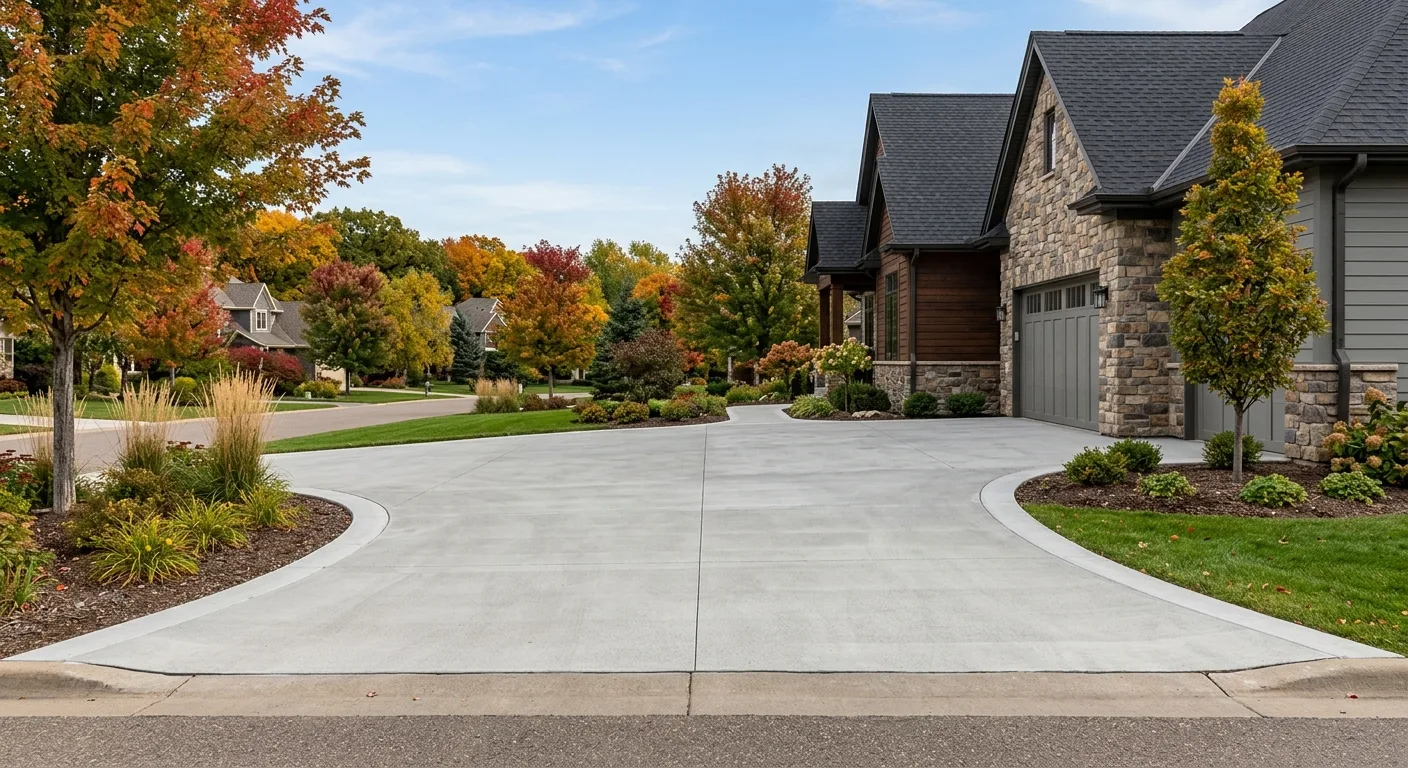
Asphalt is a flexible surface. It is aggregate bound with bitumen, and because it bends slightly instead of staying rigid, it moves with frost heave rather than fracturing, which is the genuine argument for it in a cold climate. The catch is that the same flexibility that helps it in January hurts it in July. Asphalt softens in summer heat, so it scuffs, ruts under a heavy vehicle, and tracks tar on a hot afternoon, and it oxidizes and greys out as the binder breaks down. To keep it from raveling and cracking you have to sealcoat it, and in Minnesota that means every two to three years for the life of the driveway. Concrete is the opposite bargain. It is rigid, so it does not soften in heat and does not need sealcoating on the same relentless schedule, and its light color reflects sun instead of soaking it up. The trade-off is that a rigid slab has no give, so if the base is not built for our clay it can crack, and a crack is sealed or a panel is replaced rather than skim-coated over. That single fact, base quality, is why we spend more time on the sub-base than on anything you can see. Poured right on a compacted, well-drained base, a concrete driveway simply outlasts asphalt here by a wide margin.
"We steer most homeowners on clay toward concrete when they tell us they are staying put. Asphalt looks like the deal on day one, but you sealcoat it forever and repave it decades sooner. On the base we build, a concrete driveway is a pour-it-once decision."
Does asphalt or concrete last longer in cold climates?
In a freeze-thaw climate like ours, a properly installed concrete driveway lasts roughly 30 years or more, while an asphalt driveway typically runs 15 to 20 before it needs a full repave. Both numbers assume the base was built right, because the base, not the surface, is what fails first on expansive clay. Concrete outlasts asphalt here for two reasons: it does not depend on a binder that oxidizes and breaks down in UV, and its rigid mass is not softening and re-hardening every hot day the way asphalt does. Asphalt does have the edge in one narrow spot, which is that it flexes with heave and hides small movement instead of cracking, so on a driveway with known frost problems and a short ownership horizon it can be the pragmatic call. But that flexibility comes with a maintenance clock that never stops ticking.
South-metro soil note: much of Bloomington, Edina, and the surrounding suburbs sits on expansive clay that holds meltwater against a driveway for weeks and heaves as it freezes. That is why we grade the pad to pitch water away from the house and compact the aggregate base in lifts before either surface goes down. Standing water freezing under a driveway is the fastest way to ruin one, no matter what is on top.
Concrete vs asphalt driveway cost over time
Up front, asphalt is the cheaper install, usually by a meaningful margin, and that is the number most comparison guides stop at. Cost over time tells a different story, because the two surfaces spend money on completely different schedules. We will skip the dollar figures because every yard and every site is different, but the pattern holds regardless of the numbers: asphalt front-loads the savings and then charges you back in recurring maintenance, while concrete front-loads the cost and then largely leaves you alone. Here is where the money actually goes across the life of each surface:
| Factor | Asphalt | Concrete |
|---|---|---|
| Up-front cost | Lower to install | Higher to install |
| Typical lifespan (MN) | 15 to 20 years | 30+ years |
| Recurring upkeep | Sealcoat every 2 to 3 yrs, ongoing crack fill | Occasional reseal, joint maintenance |
| Freeze-thaw behavior | Flexes with heave, softens in summer heat | Rigid, needs a strong base to resist cracking |
| Repairs | Patch and overlay, full repave sooner | Seal cracks or replace a panel |
| Cost over the long run | Cheaper start, more spent over decades | Pricier start, less spent over decades |
Sealcoating is the line item people forget. Because asphalt has to be sealed every two to three years to fight raveling and salt damage, the running total climbs quietly for the whole life of the driveway, and eventually you repave the entire thing. Concrete asks for a reseal now and then and some attention to the control joints, and that is most of it. Add in that asphalt repaves sooner, and a driveway that looked cheaper on day one often costs more by the time you have owned the house 15 or 20 years. That is exactly the math we walk homeowners through before they decide. Ready for a concrete driveway that outlasts asphalt? See our concrete driveway work or explore Nova's driveway installation across the Twin Cities.
So which one should you actually pick?
If up-front cost is the deciding factor, the driveway has a history of frost movement, or you are moving soon, asphalt is the pragmatic pick despite the sealcoating treadmill. If you plan to stay in the house, want the longest life with the least recurring work, and your site drains well or can be graded to, concrete is what we quietly point most south-metro homeowners toward, because on our clay a slab built on a real base simply outlasts asphalt and stops nickel-and-diming you every few springs. The honest answer depends on your grade, your soil, your budget, and how long you are staying, which is exactly why we look before we recommend. Prefer to talk it through with someone who has poured driveways on this soil for over a decade? Call (612) 462-2610, and we will tell you which surface fits your yard, not just which one has the best margin.
Frequently asked questions
Which is better for a Minnesota winter, concrete or asphalt?
Both survive Minnesota winters when the base is built right, but they handle the cold differently. Asphalt flexes with frost heave, so it rarely cracks from movement, but it needs sealcoating every two to three years to keep de-icing salt and water from raveling the surface. Concrete is rigid, so it depends on a compacted, well-drained base to resist cracking, but once that base is done right it holds up for 30 years or more with far less recurring upkeep. On the expansive clay across the south metro, we lean toward concrete for homeowners who are staying, because the base carries the winter load either way and concrete simply lasts longer on top of it.
How often do you have to seal an asphalt driveway in Minnesota?
Plan on sealcoating asphalt every two to three years here. The sealer protects the binder from UV, water, and de-icing salt, and skipping it lets the surface ravel, grey out, and crack within a few winters. That recurring cost is the part homeowners underestimate when they compare asphalt to concrete on up-front price alone. Concrete does not need sealing on that relentless a schedule, which is a big part of why its cost over time comes out lower even though it costs more to install.
Is a concrete driveway worth the higher cost over asphalt?
If you are staying in the house, usually yes. Concrete costs more to install, but it typically lasts 30 years or more against asphalt's 15 to 20, and it does not ask for sealcoating every couple of years. Over the time most people own a home, that longer life and lighter maintenance often make concrete the cheaper surface in the end. The one thing that makes it worth it is the base, so on our clay we build the sub-base for frost and drainage first, then pour. If your budget is tight now or you are moving soon, asphalt can still be the right pragmatic call.
Not sure whether concrete or asphalt fits your driveway?
We will scope your grade, drainage, and soil, walk you through concrete and asphalt for your specific site, and give you a straight recommendation with the total before we pour. Free estimates, seven days a week.
What Customers Say
What Twin Cities Homeowners Say
"I had a great experience with NOVA. I got a quote, I ended up adding to it the day of…and they accommodated my request. They are fast, clean and do excellent work. I’m very pleased with the product and will be using them again for the next project. Highly recommend."
Amos J Olivarez
Verified Google review
"Had the team from Nova come and completely redo my front steps and patch up cracks in my foundation. They did an amazing job and the work was done quickly and went very smooth. Plus they are just good people! Highly recommend!"
Colin Owens
Verified Google review
"I had a really great experience with Nova Concrete LLC. They worked on my driveway and patio, and everything turned out exactly how I hoped. The crew was easy to work with, showed up on time, and clearly knew what they were doing. They paid attention to the little details, and it really shows in…"
Ashley Trevino
Verified Google review
Free estimate
Ready to start your concrete project?
Call Nova Concrete for a free, no-obligation estimate. Quality work, seven days a week.
Or send us your info