Call Now: 612-462-2610 · Free Estimates · Open 7 Days
Nova Concrete
How to Fix Cracked Concrete Steps in a Minnesota Winter

Bloomington, MN

How to Fix Cracked Concrete Steps in a Minnesota Winter

  • Licensed & Insured
  • Free In-Home Estimates
  • Serving the Twin Cities metro
Driveways Patios Stamped Concrete Garage Slabs
4.8/5 from 76 Google reviews
Trusted
By Local Homeowners
Fast
Response Time
4.8-Star
Rated on Google
100%
Licensed & Insured

Bloomington, MN

Get to know Nova Concrete

4.8/5 · 76 Google reviews

Your front steps cracked, spalled, or lifted over the winter and you want to fix concrete steps before someone trips or the damage spreads. Here's the honest starting point most guides skip: in the Twin Cities, a cracked step is usually a symptom of what's happening under the slab, not just the surface you can see. We diagnose the actual cause first, freeze-heave in the subgrade, a failing base, or a purely cosmetic hairline, then tell you straight whether a repair holds or whether the step needs re-pouring. Nova Concrete has been doing steps across the metro for 12 years. We're fully insured, every job carries a 1-year warranty, and you'll know what you're dealing with before we quote. Call (612) 462-2610 for a free on-site look.

One of our own past customers in the metro summed up exactly why this matters: a driveway edge that looked fine in fall started heaving upward about two inches with the frost by mid-winter. That's the pattern here. The crack you see in April started as water finding a gap the previous fall, freezing, and jacking the slab from below. Patch the surface and ignore the base, and you'll be looking at the same crack a season or two later. That's the difference between fixing the step and just hiding it.

Fix Cracked Concrete Steps: What You Can Do Yourself and Where to Stop

You can fix a cracked concrete step yourself when the damage is genuinely cosmetic: a hairline surface crack under about 1/8 inch that hasn't reached the edges or the footing. Clean it out, pack it with a quality polyurethane or concrete-rated crack filler, and seal the surface. That buys you time and stops water from getting in before the next freeze.

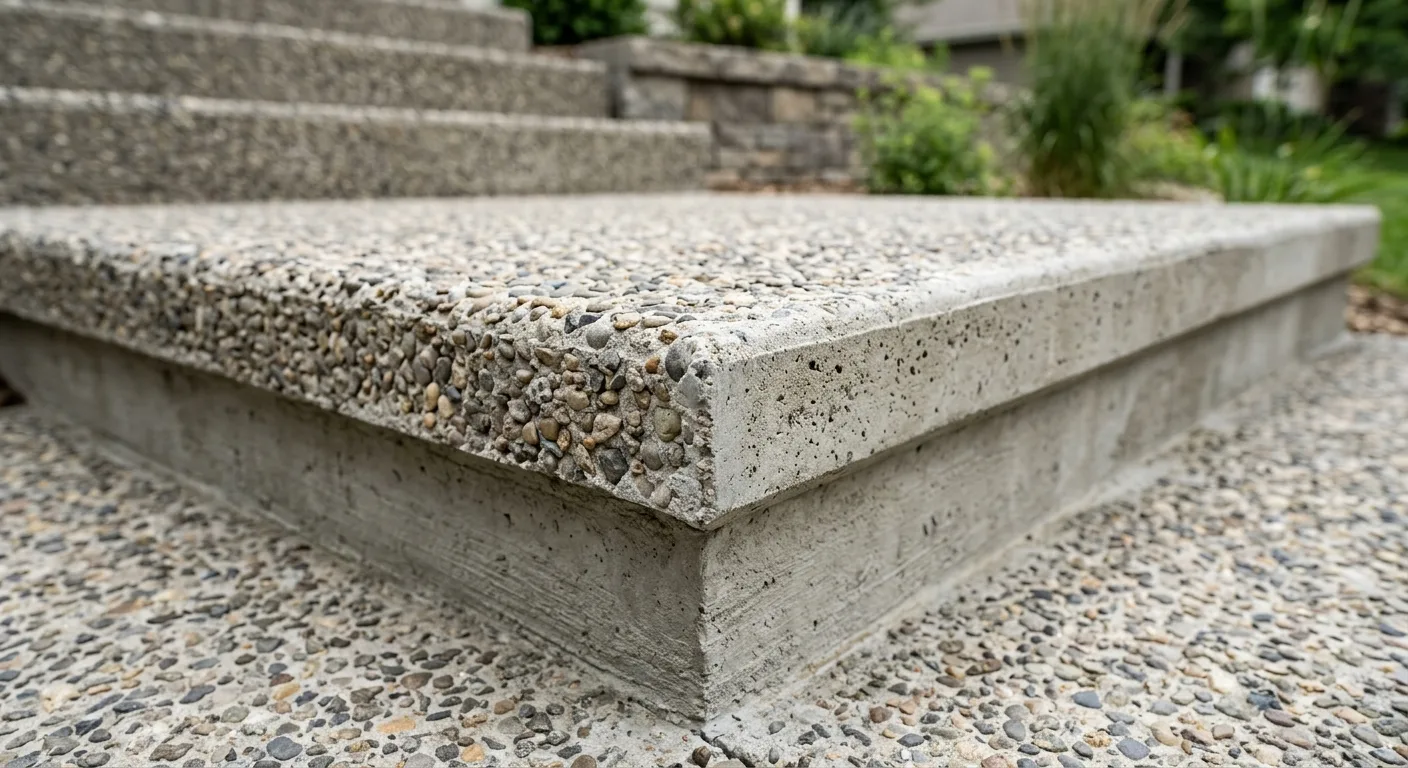
Cracked concrete front steps in the Twin Cities showing freeze-thaw damage

Here's where DIY stops, and this is the line a lot of homeowners cross without realizing it. If the crack runs all the way to the footing, if a step corner has broken off, if the step rocks or has lifted away from the ones above or below it, or if you can see the reinforcement, stop. That's structural. A filler over a structural crack is cosmetic at best and dangerous at worst, because the step keeps moving underneath it. At that point it's a repair-versus-replace call, and it's worth a set of experienced eyes before you spend money. Talk to a real crew about it: (612) 462-2610.

What we do

Cracked Concrete Steps: Repair vs Replace

The quick version: repair when the structure underneath is sound and the damage is on the surface. Replace when the base has failed or the step is moving. Here's how we tell the difference on-site.

Repair holds: hairline surface cracks

Thin cracks that haven't penetrated the full depth and aren't near an edge. A quality filler plus a sealer stops water intrusion and the step stays sound. If your steps are otherwise solid, a full replacement isn't the right call and we'll tell you so.

Repair holds: minor surface spalling

Light flaking on the tread face from de-icing salt or a weak surface layer can be resurfaced if the slab beneath is still solid. We check that the spalling is skin-deep before recommending a patch over a pour.

Replace: cracks to the footing

Once a crack runs to the footing or all the way through the riser, the load path is compromised. A patch follows the same fracture line within a freeze-thaw season or two. Re-pouring on a corrected base is the fix that actually lasts.

Replace: heaving or settling

If a step has lifted, dropped, or separated from the ones around it, the subgrade underneath has moved, usually frost-heave in our climate. No surface repair fixes a base problem. The step comes out, the base gets regraded and compacted, and it goes back in level.

Replace: crumbling edges and corners

Broken-off corners and crumbling nose edges mean the concrete has reached the end of its service life or was under-spec from the start. Rebuilding an edge on a failing step is throwing good money after bad.

Replace: a failing base underneath

When we probe and find a washed-out, poorly compacted, or frost-jacked base, the step is only as good as what it sits on. This is the most common thing cheaper installs get wrong, and it's exactly why those steps crack again fast.

Why Concrete Steps Crack in Minnesota

Concrete steps crack in Minnesota mainly because of freeze-thaw action on water that got where it shouldn't. Water seeps into a hairline crack, an unsealed surface, or the soil under the slab. When it freezes it expands, and it pushes, on the crack, on the slab, on the whole step from below. Do that a few dozen times a winter and you get spalling, widening cracks, and heaving. Our region runs some of the harshest freeze-thaw cycling in the country, and it's unforgiving on concrete that wasn't built for it.

"The crack you see in spring started the previous fall as water finding a gap. The freeze did the rest. Fix the water path and the base, or you'll be back here next year."

Cracked concrete front steps in the Twin Cities showing freeze-thaw damage

The steps that survive it share three things: a properly compacted subbase that drains, air-entrained concrete mixed to the right water-cement ratio, and adequate compressive strength (typically 4,000 PSI or better for steps). We pour our exclusive mixes to exactly that standard because in this climate it isn't optional. Older stoops poured on bare, poorly-drained fill are the ones we replace most, common on the pre-1980 housing stock across Minneapolis, St. Paul, and the inner-ring suburbs like Richfield and St. Louis Park where original steps are now well past 40 years old.

How to Form and Pour Concrete Steps the Right Way

Forming and pouring concrete steps correctly is what separates a step that lasts 25 to 40 years from one that fails in five. If you're weighing a fresh pour, here's the sequence we follow, and the order matters.

  1. Full demo and haul-off. The old step comes out completely. We don't pour a thin cap over a failing structure, because it follows the same failure pattern within a season or two.
  2. Base grading and compaction. The subbase is graded to drain away from the house and mechanically compacted. This is the step cheaper jobs cut, and it's the single biggest reason steps crack again.
  3. Form and reinforce. Forms are set to the correct rise and run, with reinforcement placed where the load needs it. Steps carry more concentrated load than flatwork, so the mix and rebar spec are higher.
  4. Pour with the right mix. We place air-entrained, 4,000-PSI-or-better concrete and never add water on-site to extend workability, that quietly wrecks the strength and voids the guarantee.
  5. Finish and cure. Broom, exposed aggregate, stamped, or colored to match an adjacent walkway or entry. Then we let it cure. We don't rush it.

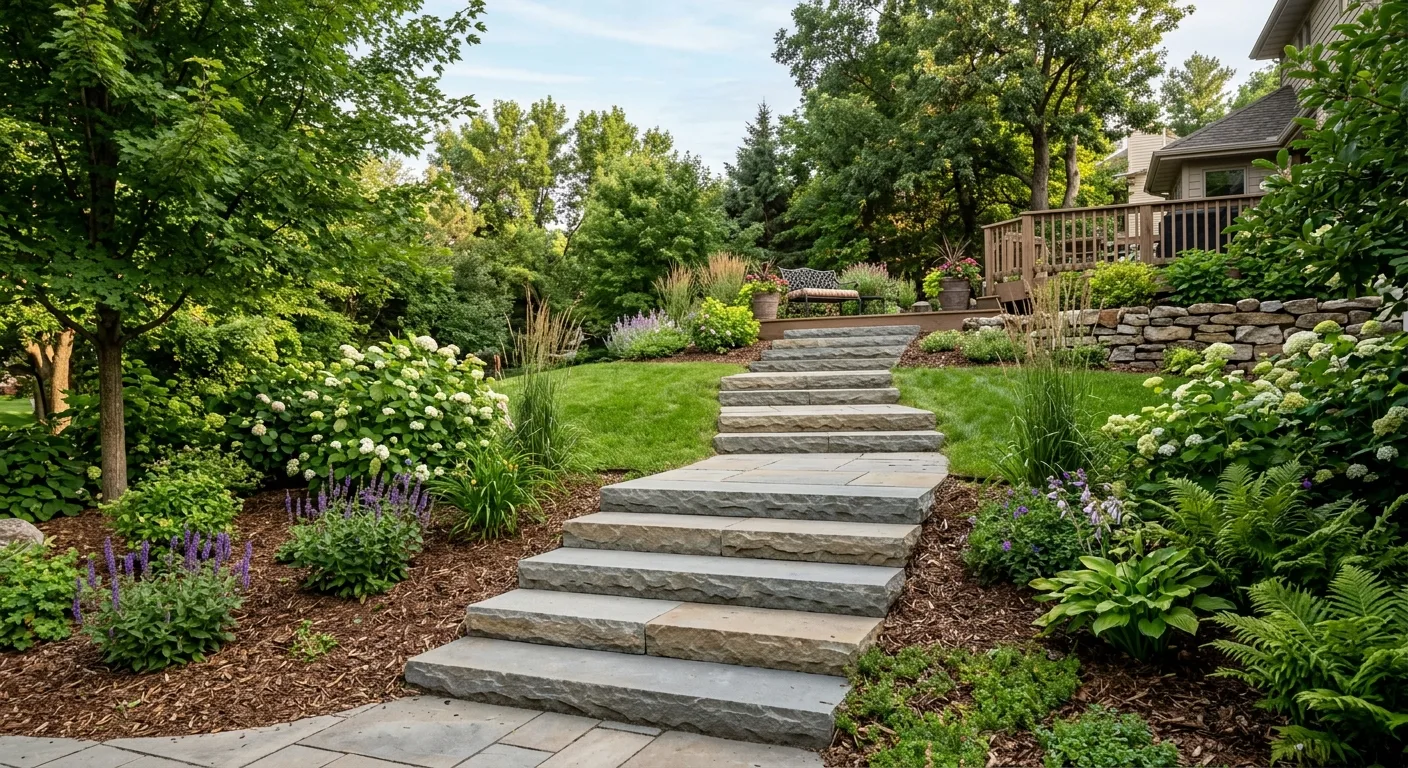
Finished concrete steps and walkway repair in the Twin Cities metro

That's the same standard behind our full concrete steps installation and replacement service. If you'd rather not form and pour steps yourself, and most homeowners shouldn't, we'll give you a flat-rate number after a look. Request a free estimate and we'll come back with the total before any work starts.

What About a Cracked Concrete Walkway?

The same freeze-thaw logic applies to a cracked concrete walkway or sidewalk. A crack across a walkway slab is usually a control-joint failure or subgrade movement, and the repair-versus-replace call works the same way: seal a stable hairline, but replace a slab that's heaved, settled, or cracked full-depth across the walking surface. Trip hazards on a walkway are a liability the same way a broken step is.

Cracked concrete front steps in the Twin Cities showing freeze-thaw damage

We handle walkway and sidewalk repair and replacement across the metro, and we cover the details of our concrete step and walkway repair in Bloomington if you want to see how we approach it locally. If your steps and walk are both showing cracks after this last winter, get them looked at together. Call (612) 462-2610 and we'll tell you what actually needs replacing and what doesn't.

Our work

Where We Fix Cracked Steps Across the Twin Cities

Nova Concrete repairs and replaces cracked steps and walkways across the full Twin Cities metro, serving Andover, Apple Valley, Blaine, Bloomington, Brooklyn Park, Burnsville, Coon Rapids, Eagan, Eden Prairie, Edina, Lakeville, Maple Grove, Minneapolis, Minnetonka, Plymouth, Richfield, Roseville, Savage, St. Louis Park, St. Paul, and Woodbury. If your front steps cracked or heaved this winter and you're in the metro, we're your crew.

Cracked concrete front steps in the Twin Cities showing freeze-thaw damage
Newly poured concrete steps replacing cracked steps on a Minnesota home
Finished concrete steps and walkway repair in the Twin Cities metro
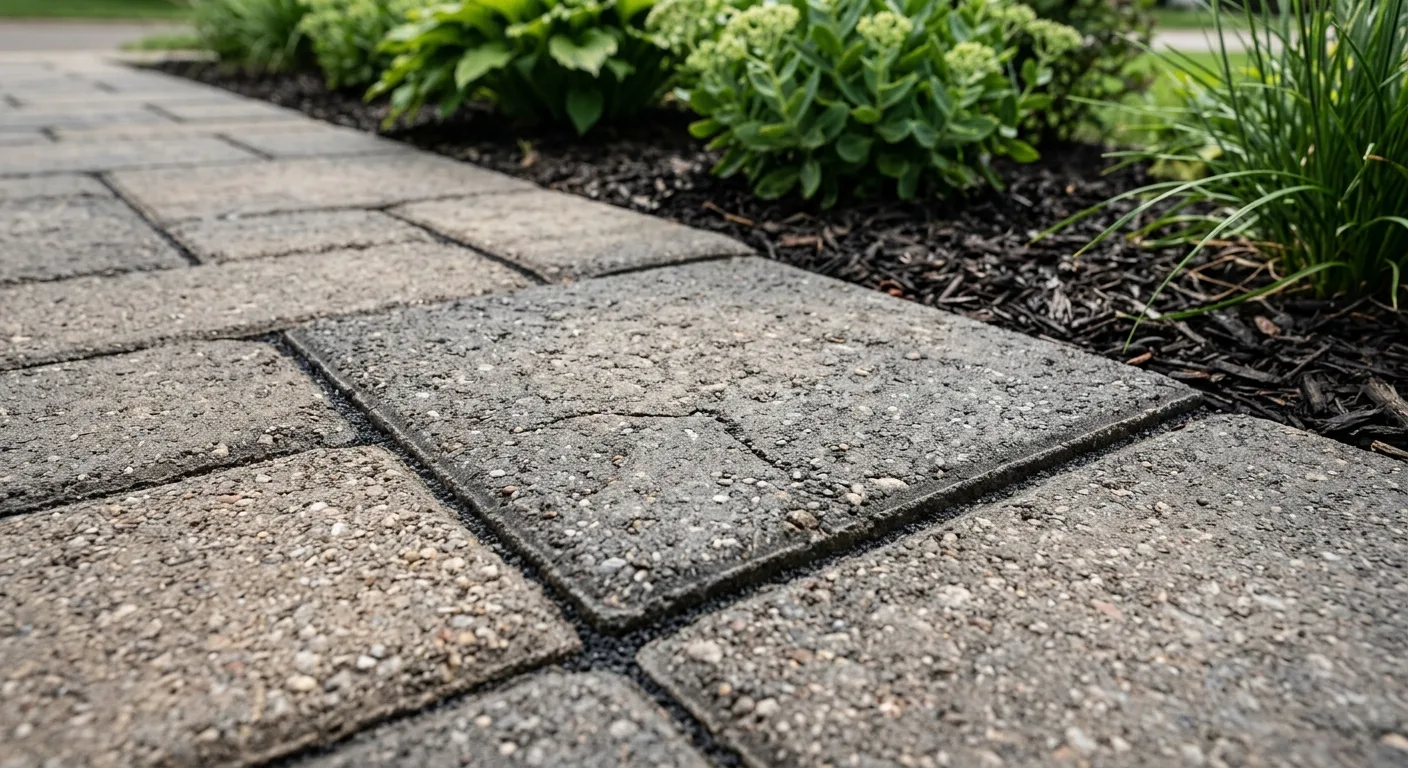
Repaired concrete walkway connecting to front steps on a Minnesota property

FAQ

Cracked Concrete Steps: Common Questions

The questions homeowners ask us most when their steps crack over winter.

Why do concrete steps crack in Minnesota? +
Almost always freeze-thaw. Water gets into a crack, an unsealed surface, or the soil under the step, freezes, expands about 9 percent, and pushes the concrete apart. Minnesota runs one of the harshest freeze-thaw cycles in the country. Steps poured on a poorly compacted or poorly drained base, or with an under-spec mix, fail fastest, often within five to ten years instead of the 25 to 40 they should last.
Can I fix a cracked concrete step myself? +
If the crack is a hairline under about 1/8 inch that hasn't reached the edge or the footing, yes. Clean it, fill it with a concrete-rated polyurethane filler, and seal the surface to keep water out. Stop if the crack runs to the footing, a corner has broken off, the step is heaving or rocking, or you can see reinforcement. That's structural, and a filler won't hold because the step keeps moving underneath it.
Should I repair or replace my cracked concrete steps? +
Repair when the structure underneath is sound and the damage is cosmetic: hairline cracks or light surface spalling. Replace when the base has failed or the step is moving: cracks to the footing, heaving or settling, crumbling edges, or a washed-out base. A patch over a structural problem follows the same crack line within a freeze-thaw season or two. We'll tell you straight which one you're looking at, and we won't sell a replacement when a repair is the right answer.
Can you pour new concrete steps over old cracked ones? +
Technically possible, rarely a good idea. A thin cap over a failing step follows the same failure pattern within a season or two, and the bond between old and new concrete is never as strong as a fresh pour on a properly prepared base. In most cases we remove the old steps, regrade and compact the base, and pour fresh. That's the work that actually lasts through Minnesota winters.
How much does it cost to fix cracked concrete steps? +
A cosmetic crack repair or single-step patch can run a few hundred dollars. A full stoop or multi-step replacement typically runs $1,000 to $6,000 or more, depending on the number of steps, total width, access, and whether decorative finishes are involved. Every job is different. We give you a flat-rate number after an on-site look, with no change orders you weren't warned about. Contact Nova Concrete for an accurate estimate.
How long should properly built concrete steps last? +
With correct subbase prep, air-entrained concrete, and the right mix strength, steps in Minnesota's climate should last 25 to 40 years. Steps built on inadequate compaction, with the wrong mix, or without air entrainment can fail in five to ten. Sealing every two to three years helps protect the surface. If your steps are spalling, cracking full-depth, or heaving seasonally, they've reached the end of their service life.

Free estimate

Get Your Cracked Steps Looked At, Free

Cracked, spalling, or heaving front steps are a safety problem, and in Minnesota they rarely fix themselves. We'll come look, tell you honestly whether it's a repair or a re-pour, and give you a flat-rate number before any work starts. Fully insured, 1-year warranty, 12 years building steps across the Twin Cities. Call (612) 462-2610 or reach out online for your free estimate.

Or send us your info

What Customers Say

What Twin Cities Homeowners Say

"I had a great experience with NOVA. I got a quote, I ended up adding to it the day of…and they accommodated my request. They are fast, clean and do excellent work. I’m very pleased with the product and will be using them again for the next project. Highly recommend."

Amos J Olivarez

Verified Google review

"Had the team from Nova come and completely redo my front steps and patch up cracks in my foundation. They did an amazing job and the work was done quickly and went very smooth. Plus they are just good people! Highly recommend!"

Colin Owens

Verified Google review

"I had a really great experience with Nova Concrete LLC. They worked on my driveway and patio, and everything turned out exactly how I hoped. The crew was easy to work with, showed up on time, and clearly knew what they were doing. They paid attention to the little details, and it really shows in…"

Ashley Trevino

Verified Google review