
Bloomington, MN
Paver Stones vs Stamped Concrete: Which Patio Surface Wins in Minnesota?
- Licensed & Insured
- Free In-Home Estimates
- Serving the Twin Cities metro
Request a Callback
Request a Callback
We respond same day. Free estimates, seven days a week.
- Trusted
- By Local Homeowners
- Fast
- Response Time
- 4.8-Star
- Rated on Google
- 100%
- Licensed & Insured
Paver stones vs stamped concrete comes down to one question most comparison guides skip: how does each surface survive a Minnesota winter? Down here in the south metro we watch patios go through 30 to 40 freeze-thaw swings between November and April, and that cycle is what actually decides which surface still looks good in year ten. This guide walks through how pavers, stamped concrete, and exposed aggregate each behave in our climate, what each one costs you in upkeep, and which finish we steer a homeowner toward once we have seen their yard. Nova Concrete pours and finishes decorative patios across Bloomington, Edina, and the surrounding suburbs, and owner Olidia Nova has our crew scope the grade and drainage before recommending any surface, because in this soil the base matters more than the finish.
The short version: pavers flex with frost heave and let you lift-and-reset a bad section, but the joints invite weeds and the labor cost is high. Stamped concrete gives you one clean monolithic surface for less money, but a crack is a repair, not a swap. Exposed aggregate splits the difference: it hides wear better than either and grips underfoot on ice. Your soil and your budget pick the winner, not a spec sheet.
Paver stones vs stamped concrete: the real trade-off
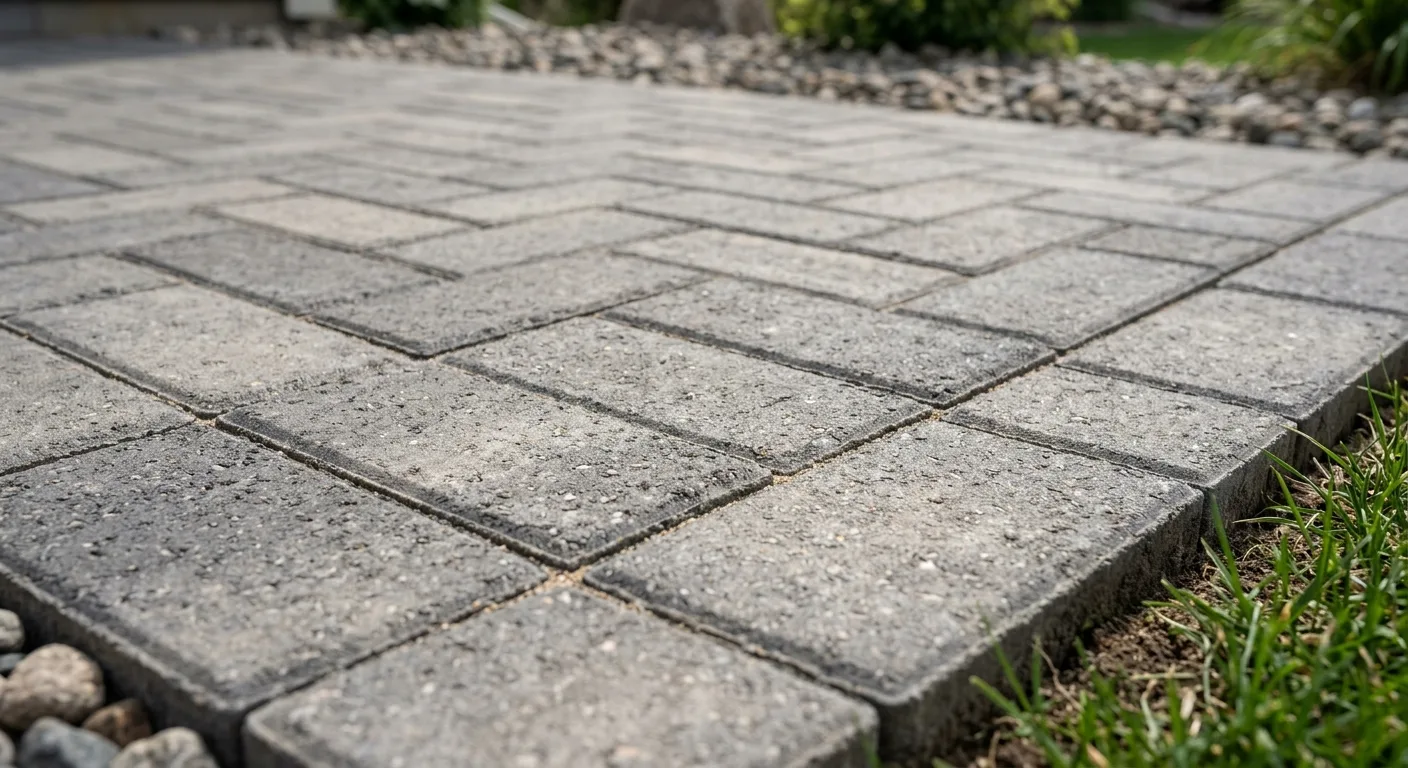
Pavers are individual units set on a compacted base and sand. Because they are separate pieces, they move with the ground instead of fighting it, so when frost heaves the base a few degrees out of level, the system flexes rather than fractures. That is the genuine advantage in a frost climate. The catch is the joints. Every seam between pavers is a place for sand to wash out, weeds to root, and ants to nest, and in our experience a paver patio in the Twin Cities needs its joints re-sanded and a section or two re-leveled every three to five years. Stamped concrete is the opposite bargain. It is a single slab with a pattern and color pressed into the surface before it cures, so there are no joints to weed and nothing to re-level. You get the look of stone, brick, or slate for meaningfully less than hand-laid pavers. The trade-off is that a slab has no give. If the base is not built for our clay, a stamped patio can crack, and a crack is patched or the panel is replaced rather than lifted out and reset. This is why we spend more time on the sub-base than on the stamp.
"We have stopped quoting stamped concrete on a thin base in this metro. On expansive clay, the base is the whole job. Build it right and the slab lasts decades. Cheap out on it and you are patching by spring."
Stamped concrete vs exposed aggregate: which decorative finish holds up
Both stamped concrete and exposed aggregate are poured slabs, so they share the same frost behavior and the same dependence on a good base. The difference is the surface and how it ages. Stamped concrete carries its color and texture in a thin top layer, so it looks the sharpest on day one and needs a fresh coat of sealer every two to three years here to keep the color from fading and to keep de-icing salt from pitting it. Exposed aggregate washes the top paste off to reveal the stone in the mix, so its texture is the stone itself, not a printed pattern. That makes it far more forgiving as it wears, and the rough surface grips better than smooth stamped concrete when there is a skim of ice on it in February, which matters on a patio your family actually uses in shoulder season. If you want the crispest decorative pattern and you will keep up with sealing, stamped wins on looks. If you want a surface that shrugs off wear, hides the odd scuff, and stays grippy in our winters, exposed aggregate is the quieter, tougher choice. Explore both in stamped concrete patio installation and our exposed aggregate finishes.
Which patio surface lasts longest in Minnesota?
Longevity here is decided by two things: how the base handles frost, and how the surface handles salt and water. All three surfaces can last 25 years or more when they are installed right, but they fail in different ways. A poured slab, whether stamped or exposed aggregate, lasts longest with the fewest repairs when the sub-base is compacted properly and the slab is pitched to drain, because standing meltwater freezing in a surface crack is what turns a hairline into a real problem. Pavers rarely crack, but they demand steady maintenance to stay level and weed-free, so their long life is a life of small, recurring work. The single biggest lifespan killer we see across all three is bad drainage against the house and salt sitting on an unsealed surface through a thaw. Here is how the three stack up in our climate:
| Factor | Pavers | Stamped Concrete | Exposed Aggregate |
|---|---|---|---|
| Freeze-thaw behavior | Flexes with heave, rarely cracks | Rigid, needs a strong base to resist cracking | Rigid, same base rules as stamped |
| Upkeep in MN | Re-sand joints, re-level every 3 to 5 yrs | Reseal every 2 to 3 yrs | Reseal every 2 to 4 yrs, most forgiving |
| Repairs | Lift and reset a section | Patch or replace a panel | Patch or replace a panel |
| Winter grip | Textured, good grip | Smooth unless textured, can be slick when iced | Rough stone surface, best grip |
| Relative cost | Highest labor | Mid | Mid |
Bloomington drainage note: much of the south metro sits on the kind of expansive clay that holds water against a slab for weeks after snowmelt. That is why we grade the pad to pitch water away from the foundation before a single stamp goes down. It is the unglamorous half of the job that decides whether a patio lasts.
So which one should you actually pick?
If your yard has poor drainage or a history of frost movement and you want the option to lift and repair sections over time, pavers are the safe pick despite the ongoing joint work. If you want the widest range of looks, an unbroken surface with no weeds, and you will commit to resealing, stamped concrete gives you the most design for your dollar. If you want the toughest, most slip-resistant, lowest-drama surface for a Minnesota patio, exposed aggregate is what we quietly point most homeowners toward once we have walked their yard. The honest answer is that the right choice depends on your grade, your budget, and how much weekend maintenance you are willing to do, which is exactly why we look before we recommend. Ready to talk it through? Call (612) 462-2610 or head to our concrete patio page to get a concrete patio quote, and we will tell you which surface fits your yard, not just which one has the best margin.
Frequently asked questions
Do pavers or stamped concrete crack more?
Stamped concrete is the one that cracks, because it is a rigid slab. Pavers are individual units that flex with frost heave instead of fracturing, so they rarely crack, though they do shift and need re-leveling. In practice a stamped patio only cracks when the sub-base was built too thin for our clay. Build the base right and a stamped slab in the Twin Cities holds up for decades, which is why we treat the base as the real job, not the stamp.
How much maintenance does stamped concrete need?
Plan on resealing stamped concrete every two to three years in Minnesota. The sealer protects the color and, more importantly, keeps de-icing salt and meltwater from pitting the surface through freeze-thaw cycles. Beyond that it is a rinse and the occasional pressure wash. Skip the sealer and salt will dull and pit the top layer within a few winters, so the resealing is the cost of keeping stamped concrete looking new.
Is stamped concrete cheaper than pavers?
Usually yes. Pavers carry the highest labor cost because every unit is hand-set on a prepared base, while a stamped slab is poured and finished in one pass. You pay for that labor savings by giving up the lift-and-reset repairability of pavers. Exposed aggregate lands in the same range as stamped concrete and buys you a tougher, more slip-resistant surface, which is why we bring it up on most patio quotes.
Not sure which surface fits your yard?
We will scope your grade and drainage, walk you through pavers, stamped concrete, and exposed aggregate for your specific site, and give you a straight recommendation. Free estimates, seven days a week.
What Customers Say
What Twin Cities Homeowners Say
"I had a great experience with NOVA. I got a quote, I ended up adding to it the day of…and they accommodated my request. They are fast, clean and do excellent work. I’m very pleased with the product and will be using them again for the next project. Highly recommend."
Amos J Olivarez
Verified Google review
"Had the team from Nova come and completely redo my front steps and patch up cracks in my foundation. They did an amazing job and the work was done quickly and went very smooth. Plus they are just good people! Highly recommend!"
Colin Owens
Verified Google review
"I had a really great experience with Nova Concrete LLC. They worked on my driveway and patio, and everything turned out exactly how I hoped. The crew was easy to work with, showed up on time, and clearly knew what they were doing. They paid attention to the little details, and it really shows in…"
Ashley Trevino
Verified Google review
Free estimate
Ready to start your concrete project?
Call Nova Concrete for a free, no-obligation estimate. Quality work, seven days a week.
Or send us your info